Engineering the Modern Retro
Behind the scenes of SnakeLoop Studio's game logic, controls design, and visual style. Discover how we process inputs, render the neon grid, and eliminate latency.
Core Mechanics
Predictable Yet Punishing
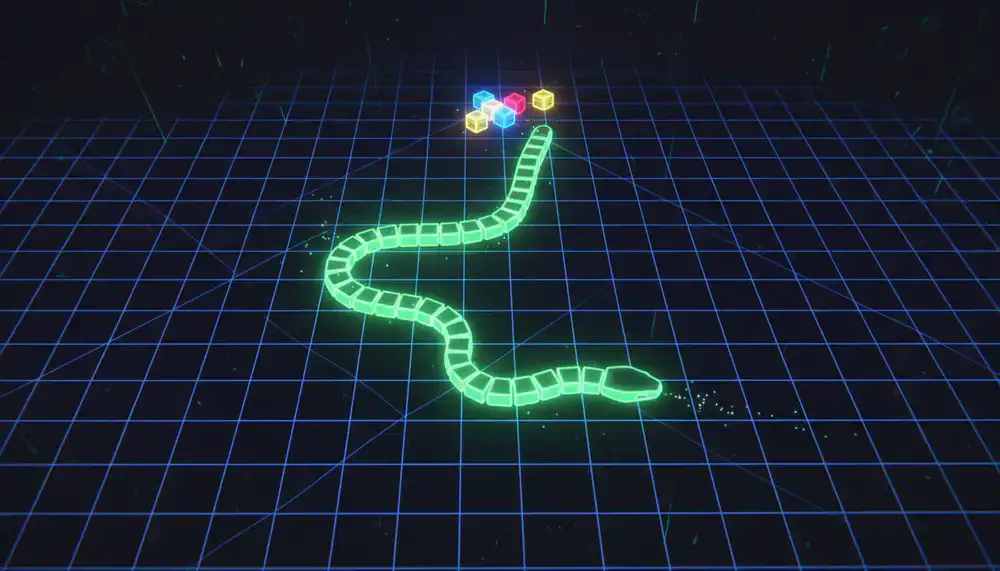
At its core, a snake game is an exercise in precise array management. Every time the snake eats, we push a new segment to the front of the array while preserving the tail. When moving normally, the tail pops off and unshifts to the new head position.
Our logic engine ensures grid snapping is perfectly aligned to a 20x20 sub-pixel grid system. This guarantees that frame drops do not result in clipped collisions. We decouple the rendering frame rate from the physics tick rate, ensuring smooth animations while maintaining the rigid, unforgiving mechanical precision of classic arcade cabinets.
- [+] Deterministic physics loop
- [+] Fixed 60Hz logic ticking
- [+] Sub-grid interpolation for rendering
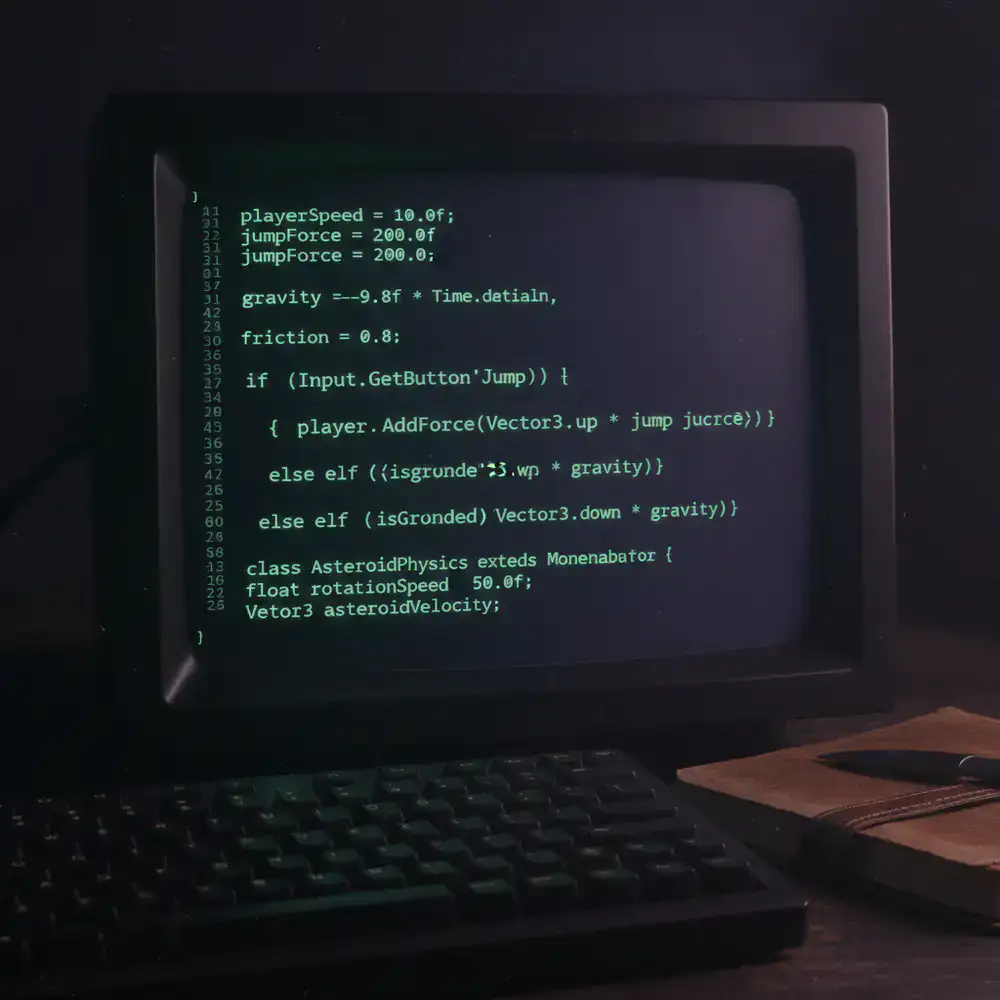
Physics ticks are strictly separated from browser animation frames, avoiding ghost collisions.
Input Handling
Zero Latency Buffering
The most common frustration in classic snake iterations is the "double turn" suicide—pressing Down then Left so rapidly within a single tick that the snake registers the final input and reverses into itself before moving downward.
We implemented a secure two-slot input buffer queue. Actions are stacked and resolved strictly per grid tick. If you input three commands in 10 milliseconds, the first two valid orthogonal shifts queue up, ensuring you execute a perfect zig-zag instead of triggering an instant game over.
Aesthetics & Shaders
Cathode Ray Nostalgia
Modern hardware allows us to move past strict pixel limitations while honoring the retro aesthetic. We utilize a custom WebGL pipeline to render genuine pixel-art assets, then apply subtle CRT distortion shaders, scanlines, and a multi-pass bloom effect to make the neon green grid pop. The result is a visual experience that feels exactly how you remember arcade monitors looking, rather than how they actually were.
CRT Curvature
Slight barrel distortion at the edges of the viewport simulates heavy glass tube monitors.
Bloom Pass
Dual-pass Gaussian blur added to high-luminosity pixels (snake and food) for intense glowing effects.
Scanline Overlay
Alternating line darkening mapped directly to screen space coordinates for classic texture.
Join the Developer Sandbox
Interested in the technical weeds? Sign up to receive our monthly development log, early access to pre-release builds, and direct communication with our core engineering team.